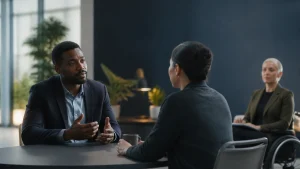
A business meal can feel different from a traditional interview, but the purpose is much the same. You are there to learn about the opportunity, discuss your experience, and build a professional connection. The meal is part of the setting, not a test of your personal worth or a complete measure of your competence.
A few practical habits can help you feel prepared: review the invitation, plan for dietary needs, arrive with time to spare, order thoughtfully, stay engaged in conversation, and recover calmly if something goes wrong. Expectations vary by restaurant, organization, culture, and location, so use these guidelines as adaptable preparation rather than rigid rules.
Prepare before you arrive
Read the invitation carefully
Confirm the date, time, restaurant, address, host’s name, and any instructions about transportation or dress. If the invitation is unclear, ask a concise question rather than guessing.
You might write:
Thank you for the invitation. I look forward to meeting with you on Tuesday. Could you please confirm whether business professional or business casual attire is expected?
Review the restaurant’s website and menu in advance. This can help you identify dishes that fit your dietary needs and reduce decision-making pressure at the table. Select two or three possible meals that are reasonably easy to eat while speaking.
It is also useful to review the host’s role, the organization’s work, and the position description. Prepare several questions that invite conversation, such as:
- What would success look like in the first few months?
- How does the team typically collaborate?
- What qualities help someone contribute effectively in this role?
Plan for dietary needs
Dietary needs are a normal part of planning. If you have a food allergy, religious or cultural dietary practice, vegetarian or vegan preference, medical restriction, or another need that affects what you can eat, communicate it in advance.
Keep the message direct and respectful:
I wanted to mention that I follow a vegetarian diet. I am happy to work with the restaurant’s available options.
For an allergy, be more specific:
I have a severe shellfish allergy. Could we please choose a restaurant that can provide safe options and confirm ingredients?
You do not need to provide a personal history or apologize. The purpose of early communication is to give the host and restaurant time to plan responsibly. If you are unsure whether a dish is safe, ask the server specific questions. Food safety concerns should take priority over trying to appear easygoing.
Accessibility needs deserve the same practical attention. If you need an accessible entrance, a particular seating arrangement, a quieter table, menu assistance, or another accommodation, share that information with the person coordinating the meal. For general information about accessibility responsibilities in public accommodations, consult the U.S. Department of Justice guidance on Title III of the Americans with Disabilities Act.

Arrive ready to participate
Aim to arrive approximately 10 to 15 minutes early. This gives you time to locate the restaurant, use the restroom, silence your phone, and settle yourself before the meeting begins.
If you arrive first, let the host or restaurant staff know whom you are meeting. You can wait near the entrance or at the designated table, depending on the setting. Avoid occupying the table with your phone or spreading out papers.
When your interviewer arrives, stand if you are able and comfortable doing so. Offer a warm greeting and use the name and form of address they provided. A simple introduction is enough:
It is good to meet you, Jordan. Thank you for making time to speak with me.
A handshake may be appropriate in some settings, but it is not required in every interaction. Follow the other person’s lead and respect personal, cultural, and accessibility preferences. A friendly verbal greeting and attentive eye contact, when comfortable and appropriate, can also communicate respect.
Wait for the host to indicate where to sit. Place your phone away from the table and keep bags, briefcases, and personal items where they will not interfere with the meal or other guests.
Order with judgment, not anxiety
When it is time to order, choose a meal that fits your needs and allows you to participate in conversation. Food that is difficult to cut, especially messy dishes or items that require extensive handling, may be inconvenient in an interview setting. That does not mean those foods are unprofessional. It simply means that a quieter, easier-to-manage option may help you focus.
You can ask the host or server a practical question:
Is there a dish here that is easy to enjoy while having a conversation?
Choose an item within a moderate price range unless the host gives specific instructions. If the host recommends a particular dish, you can consider it, but you are not required to order something that conflicts with your dietary, religious, medical, or personal needs.
Order clearly and avoid overexplaining. If you need a substitution, state the request briefly. A serious allergy or other safety concern is a valid reason to ask detailed questions or change an order. The goal is not to avoid all adjustments. The goal is to communicate them calmly and responsibly.
Choose an alcohol-free option
The safest approach during a job-search meal is to choose a nonalcoholic beverage. Water, sparkling water, iced tea, coffee, soda, or a clearly alcohol-free beverage are all reasonable options.
If the interviewer orders alcohol, you can decline without offering a detailed explanation:
No alcohol for me, thank you. I will have sparkling water.
You may also say:
I am going to stay with an alcohol-free drink so I can remain focused on our conversation.
Your choice may reflect personal, religious, cultural, health, recovery, transportation, or other considerations. You do not owe anyone a justification, and you should never feel pressured to drink.

Keep the conversation professional and natural
A meal interview is still an interview. Listen carefully, answer questions with examples, and connect your experience to the role. Take small bites and finish chewing before responding. It is acceptable to pause while eating rather than trying to fill every silence.
Avoid treating the meal as a performance. You do not need to dominate the conversation or demonstrate constant enthusiasm. Good professional communication includes asking thoughtful questions, acknowledging what the other person says, and allowing the conversation to develop.
Topics related to the organization, industry, role, team, and professional interests are usually useful. Personal subjects may arise naturally, but do not assume that everyone shares your comfort level with politics, religion, finances, health, relationships, or other sensitive topics.
Be courteous to restaurant staff. Speak respectfully, make requests without unnecessary urgency, and thank people who assist you. Courtesy should not be treated as a secret test. It is simply part of participating in a shared public setting with consideration for others.
Remember that dining customs vary. Utensil use, seating expectations, eye contact, conversation patterns, and forms of address may differ across cultures and families. If you are unsure, observe the host discreetly, ask a neutral question, or confirm expectations with the person who arranged the meeting.
Handle mistakes with composure
Spills, dropped utensils, wrong orders, awkward pauses, and unexpected questions happen. A small mistake does not require a dramatic response.
Use a simple process:
- Pause.
- Address the immediate issue.
- Apologize briefly if your action affected someone else.
- Return your attention to the conversation.
For example:
I am sorry about that. Let me move my notes so they are out of the way.
If you drop a utensil, ask the server for another one rather than reaching under the table. If your meal arrives incorrectly and the issue affects safety or a clearly communicated dietary need, explain the problem promptly. Otherwise, avoid turning a minor inconvenience into the focus of the meal.
Composure is not pretending that nothing happened. It is responding proportionately and continuing respectfully.
Follow up after the meal
Send a brief thank-you message within one business day. Mention a specific part of the conversation so the message feels personal and useful.
Subject: Thank you for today’s conversation
Dear Jordan,
Thank you for meeting with me today. I appreciated learning more about the team’s approach to client communication and the priorities for this role. Our conversation reinforced my interest in the opportunity, particularly the chance to contribute my experience with customer service and project coordination.
Thank you again for your time.
Best,
[Your Name]
Proofread the message before sending it. Use the person’s preferred name, keep the tone professional, and avoid making promises about what will happen next. A thank-you note shows follow-through, but it cannot guarantee an interview outcome or employment decision.

A practical rehearsal checklist
Before the meal, ask yourself:
- Do I know where I am going and when I need to arrive?
- Have I reviewed the menu?
- Have I communicated dietary, accessibility, or alcohol-free needs?
- Do I know how to describe my experience in a few clear examples?
- Have I prepared several questions?
- Is my phone set to silent and stored away?
- Do I have a pen, notepad, and any necessary interview materials?
- Do I know how I will follow up afterward?
Practicing the logistics can reduce uncertainty. If you want structured support, The Comportment Group’s College and University Readiness training includes interview and dining skills, networking, professional presence, and follow-up etiquette. The Comportment Group also provides business etiquette and professional presence training for individuals and organizations.
Ask about career-readiness training
If your college, career services office, student organization, or early-career program would benefit from practical preparation for interviews, recruiting events, and professional meals, schedule an approved consultation with The Comportment Group. The Oakland-based firm can discuss a customized approach based on the audience, setting, and goals.