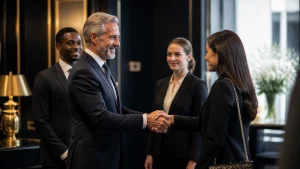
A high-stakes visit is more than a meeting. It is a performance of professional values. When a major donor, a head of state, or a global CEO enters your building, they are reading the environment. They notice the silence. They notice the order. They notice the tiny details of how they are greeted and where they are seated.
Presence, precision, and dignity are skills, not accidents. In these moments, protocol is your strongest tool. It provides the structure that allows hospitality to feel effortless. It removes the guesswork. It ensures that the focus remains on the relationship, not on a logistical error.
Managing protocol and VIP visits requires a mindset of rigorous preparation. You are not just hosting a person. You are protecting a reputation.
The foundation of pre-visit intelligence
Success begins weeks before the guest arrives. You must gather intelligence. You need to know more than their name and title. You need to understand their world.
Start with a briefing pack. This document is the bible for the visit. It contains the guest’s preferred form of address. It lists their dietary restrictions. It notes their allergies. It identifies their mobility needs.
Research cultural norms. A greeting that is standard in New York may be abrupt in Tokyo. A gift that is thoughtful in London may be inappropriate in Dubai. Understand their religious observances. Know their language preferences.
Capture these details early. Share them with only the essential staff. Discretion is a core component of protocol. The less people know, the more secure and private the guest feels.
Use this intelligence to build the schedule. A minute-by-minute program is essential. It should include arrival routes, tour paths, and bathroom breaks. It should account for photo opportunities and transition times. A rushed VIP is an uncomfortable VIP. Build in white space.
The choreography of movement
Movement through a building should be fluid. It should feel natural but be strictly controlled. You must map the guest journey from end to end.
Walk the route yourself. Start at the drop-off zone. Is it clean? Is it clear of obstructions? Is the elevator held and ready?
Designate a protocol lead. This person is the single owner of the guest experience. They coordinate with security teams. They conduct pre-event walkthroughs. They identify holding areas and private exits.

The VIP should be accompanied at all times. A designated escort manages transitions. They anticipate needs. They hold doors. They guide the guest through secure routes.
Avoid crowded public spaces. Limit entry to restricted areas. Ensure that staff members along the route are briefed. They should not ask for selfies. They should not request autographs. They should stand with composure and offer a polite nod. This creates an atmosphere of institutional excellence.
Explore our Protocol and Events Styling services →
Mastering the order of precedence
Protocol is the art of order. In high-stakes environments, the order of precedence is non-negotiable. It dictates who speaks first, who walks first, and who sits where.
Rank matters. VIPs should be welcomed by leaders at a comparable level. If a CEO is visiting, your CEO should be at the door. If a Dean is visiting, your Dean should be the greeter. This shows respect for the guest’s position.
Introductions must follow a specific hierarchy. Introduce the lesser-ranked person to the higher-ranked person. Speak the higher-ranked name first. Use their full title. "President Smith, I would like to introduce our Director of Operations, Jane Doe."
In formal meetings, seating is the most visible sign of protocol. The most important guest sits to the immediate right of the host. The second most important guest sits to the host's left.

Use place cards. They remove social anxiety. They ensure the room is balanced. The layout should facilitate the primary conversation. If the meeting is cross-cultural, consult the guest’s protocol office. They will appreciate your diligence.
The arrival and the first impression
The first ten seconds of an arrival set the tone for the entire visit. Precision here is paramount.
The greeting must be confident. A greeting sends a message. A handshake sends a message. Your host should stand tall. They should make eye contact. They should use a firm, brief grip.
Have the guest’s credentials ready. If they need a badge, have it pre-printed. It should be waiting on a tray, not fished out of a drawer.
If a gift is part of the arrival, it must be handled with discretion. Follow all legal and compliance rules. The gift should be high-quality and culturally relevant. It should be presented in refined packaging. Never give a gift that is overly flashy or burdensome to carry.
Learn more about our Core Professional Training →
Protocol at the table
Dining is where many high-stakes visits lose their polish. Business dining is not about the food. It is about the dialogue.
The table must be prepared with rigor. Every utensil has a purpose. Every glass has a place. The settings should be identical and perfectly aligned. This visual symmetry conveys a sense of stability and care.
Hosts must lead the pace of the meal. Do not pick up your fork until the VIP does. Do not begin eating until the host gives the signal.
Refreshments should be handled with silent efficiency. Waitstaff should move with grace. They should serve from the left and clear from the right. They should never interrupt a conversation to ask if someone wants more water. They should simply observe and provide.
Tailor the menu to the guest’s intelligence profile. If they are from a region that avoids certain proteins, ensure those items are nowhere near the table. Offer a balance of local specialties and familiar favorites. This shows you have considered their comfort.
The departure and the follow-up
The visit is not over when the car pulls away. The departure requires the same attention as the arrival.
Ensure the exit route is clear. The vehicle should be at the curb three minutes before the scheduled departure. The host should accompany the guest to the car door.
A final farewell should be warm and brief. Reiterate the value of the visit. "It was an honor to host you today."
After the guest departs, the protocol moves to the digital realm. Send a formal thank-you note within twenty-four hours. This should come from the senior executive host. It should be personalized. It should reference a specific point of conversation from the visit.
If photos were taken, share them promptly through secure channels. Ensure they are high-resolution and flattering to the guest.
Comportment as a competitive advantage
Hosting high-stakes guests is a test of your organization's culture. It reveals your level of discipline. It shows how you value people.
When you master protocol and VIP visits, you create an environment where trust can grow. You remove the distractions of disorder. You allow the guest to feel truly seen and respected.
These skills can be learned. They can be standardized across your team. They turn every interaction into an opportunity for personal and organizational polish.
Explore our Hospitality and Guest Experience training →
The Comportment Group
Carry yourself like the room is yours.
Presence, precision, and dignity are skills, not accidents. Our 50-course library teaches the unwritten rules of professional life so you and your people can walk into any room and own it. Let's talk about where to begin.
Explore the curriculum → | Book a pilot cohort
Phone: (510) 603-0909 | Email: info@thecomportmentgroup.com | Web: www.thecomportmentgroup.com
Presence. Precision. Dignity in the details.