A talented team is not always a professional team. You hire for technical expertise. You hire for years of experience. Yet, you often find your people struggling with the invisible mechanics of corporate life. They miss the nuance of a high-stakes meeting. They falter in their written tone. They lack the composure required for client-facing leadership. This gap is not a lack of intelligence. It is a lack of comportment. Professionalism is a set of skills. It must be identified. It must be practiced. It must be mastered.
The modern workplace demands more than technical proficiency. It demands a high level of social and emotional intelligence. When these skills are missing, the culture erodes. Trust dissolves. Client relationships suffer. This article provides a comprehensive roadmap for leaders. It lists over 50 specific soft skills examples. These examples define the standard of excellence for your organization. Use these to guide your soft skills training for employees. Use these to set a new bar for your team.
The stakes of professional polish
Unpolished behavior is expensive. It costs you reputation. It costs you revenue. A single poorly phrased email can alienate a strategic partner. A lack of presence in a presentation can lose a million-dollar contract. These are not minor inconveniences. They are significant business risks.
Organizations often focus on hard skills because they are easy to measure. Soft skills are more elusive. They are often called "unwritten rules." This label is a mistake. Rules that are unwritten are rules that are unfairly applied. To build an equitable and high-performing culture, you must make the unwritten written. You must provide clear definitions of expected behavior. This clarity creates confidence. It ensures every team member knows how to represent the brand with dignity.
Investments in workplace professionalism training pay dividends in retention. People want to work in environments characterized by respect. They want to work for leaders who model composure. Professionalism creates a container for high performance. It allows technical talent to shine without the distraction of interpersonal friction.
Professionalism and workplace etiquette
Etiquette is the foundation of respect. It is the framework that allows people to interact with clarity and ease. When your team masters etiquette, they move with a sense of authority. They make others feel comfortable. This comfort is the basis of trust.
- Punctuality as respect. Arriving early is a signal that you value the time of others.
- Meeting preparation. Reviewing the agenda before the call begins is a professional requirement.
- Active listening. Looking at the speaker and providing verbal cues shows engagement.
- Professional attire. Dressing for the role and the occasion signals a high level of care.
- Introduction mastery. Knowing how to introduce a junior colleague to a senior client with poise.
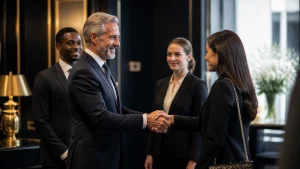
- Handshake confidence. A firm and intentional greeting sets the tone for the entire interaction.
- Digital boundary respect. Avoiding non-urgent messages outside of established working hours.
- Phone etiquette. Identifying yourself immediately and speaking with clarity.
- Discretion. Keeping sensitive company information and colleague confidences secure.
- Gratitude. Sending a formal thank-you note following a significant meeting or favor.
Professionalism is an active choice. It is a commitment to excellence in the small things. These small things aggregate into a powerful professional brand.

Corporate communication and interpersonal clarity
Clear communication is the heartbeat of a functional organization. Most workplace conflicts are simply failures of communication. Corporate communication training focuses on more than just words. It focuses on intent. It focuses on impact. It focuses on the receiver's experience.
- Email brevity. Writing concise messages that respect the reader's time.
- Tone awareness. Ensuring written communication sounds professional rather than defensive.
- Constructive feedback. Delivering critiques that are specific, actionable, and kind.
- Receiving criticism. Accepting feedback without immediate defensiveness or justification.
- Public speaking composure. Maintaining a steady pace and eye contact during presentations.
- Nonverbal alignment. Ensuring body language matches the spoken message.
- Conflict resolution. Addressing disagreements directly with the parties involved.
- Clarity of request. Stating exactly what is needed and by when.
- Follow-up consistency. Providing updates on projects before being asked for them.
- Inclusive language. Using terminology that respects and includes all team members.
Effective communication requires discipline. It requires the speaker to take responsibility for the understanding of the listener. This is a hallmark of core professional training.
Leadership and executive presence
Leadership is not a title. It is a presence. It is the ability to influence others through character and competence. Even junior employees benefit from learning leadership skills. It prepares them for the next level of their career.
- Decisiveness. Making a call when all the necessary information is present.
- Emotional regulation. Staying calm and composed during a crisis or high-pressure situation.
- Strategic thinking. Understanding how individual tasks connect to the broader company mission.
- Mentorship. Proactively helping a colleague develop a new skill.
- Accountability. Taking full ownership of a mistake without blaming others.
- Confidence without arrogance. Owning your expertise while remaining open to new ideas.
- Self-motivation. Driving projects forward without constant managerial oversight.
- Vision casting. Describing a future goal in a way that inspires the team to act.
- Delegation. Trusting others with tasks while providing the necessary support.
- Integrity. Doing the right thing even when it is difficult or unnoticed.
Executive presence is the ultimate competitive advantage. It is what separates those who are in the room from those who lead the room.

Collaboration and team adaptability
No one wins alone. The ability to work effectively within a group is essential. Adaptability is the ability to thrive in the face of change. In a fast-moving business world, these skills are critical for survival.
- Cooperation. Prioritizing the team goal over personal recognition.
- Reliability. Delivering high-quality work on the date it was promised.
- Adaptability. Pivoting to a new strategy when the current one is no longer effective.
- Cultural competency. Working effectively with people from different backgrounds and perspectives.
- Supportiveness. Offering help to a colleague who is overwhelmed with a heavy workload.
- Compromise. Finding a middle ground that serves the organization's best interest.
- Building rapport. Taking the time to understand the motivations of your colleagues.
- Virtual collaboration. Using digital tools effectively to keep remote teams aligned.
- Patience. Maintaining a positive attitude when projects take longer than expected.
- Openness to change. Embracing new technology or processes with curiosity rather than resistance.
A team that collaborates well is a team that innovates well. Collaboration is the engine of creativity.

Problem solving and critical thinking
Professionals are paid to solve problems. This requires more than just following a checklist. It requires the ability to analyze information. It requires the ability to see patterns. It requires the courage to suggest a better way.
- Logical reasoning. Using facts and data to reach a sound conclusion.
- Creative thinking. Approaching a challenge from an unconventional angle.
- Resourcefulness. Finding a way to get the job done when resources are limited.
- Prioritization. Identifying the most important tasks and focusing energy there first.
- Detail orientation. Catching errors before they reach the client or a senior leader.
- Systems thinking. Understanding how a change in one area affects the rest of the business.
- Risk assessment. Evaluating the potential downsides of a decision before acting.
- Inquisitiveness. Asking "why" to understand the root cause of an issue.
- Reflection. Reviewing a completed project to identify lessons for the future.
- Proactivity. Solving a problem before it becomes a crisis.
Critical thinking is a rare and valuable asset. It transforms an employee from a task-taker into a strategic partner. Organizations that prioritize these skills stay ahead of the competition.

The turn to professional mastery
Training for soft skills is not a one-time event. It is a continuous process of refinement. The examples listed above provide a framework. However, implementation is where the transformation happens. Your team needs more than a list. They need a system.
The Comportment Group specializes in this system. We provide the structure required to turn these abstract concepts into concrete habits. Our curriculum is designed for high-stakes environments. We teach professionals how to carry themselves with dignity. We teach them how to communicate with precision. We teach them how to lead with presence.
If your team is talented but lacks the final layer of polish, they are underperforming. They are leaving opportunity on the table. You can bridge this gap. You can provide them with the tools of the modern executive. This is the purpose of image and interpersonal coaching.
Precision is a choice
Excellence is not an accident. It is the result of intentional practice. A professional culture is built one interaction at a time. It is built one email at a time. It is built one meeting at a time.
When you invest in the comportment of your people, you invest in the future of your company. You create a brand that is synonymous with trust and quality. You empower your employees to walk into any room with confidence. The room reads them before they speak. Ensure they are reading a story of competence and respect.
The Comportment Group
Carry yourself like the room is yours.
Presence, precision, and dignity are skills, not accidents. Our 50-course library teaches the unwritten rules of professional life so you and your people can walk into any room and own it. Let's talk about where to begin.
Explore the curriculum → | Book a pilot cohort
Phone: (510) 603-0909 | Email: info@thecomportmentgroup.com | Web: www.thecomportmentgroup.com
Presence. Precision. Dignity in the details.